Minimalist Home Swaps: Your Complete Guide to Tiny House Exchanges and Alternative Living
Maya Chen
Travel Writer & Home Exchange Expert
Discover how minimalist home swaps let you experience tiny houses, yurts, and alternative living spaces worldwide—while saving thousands on accommodation.
The first time I slept in a 180-square-foot tiny house, I woke up at 3 AM absolutely convinced I was trapped. The lofted bed felt like a cozy cocoon—genuinely comfortable—but my city-conditioned brain couldn't process the silence. No traffic. No neighbors arguing about parking. Nothing but wind moving through Oregon pines.
By morning, I was completely obsessed.
That was four years ago. Since then, minimalist home swaps have become my favorite way to travel. Not every trip, mind you—sometimes you genuinely need a full kitchen and a bathtub you can actually stretch out in. But there's something about staying in a tiny house, a converted shipping container, or a hand-built cabin that resets your brain in ways a Marriott never could.
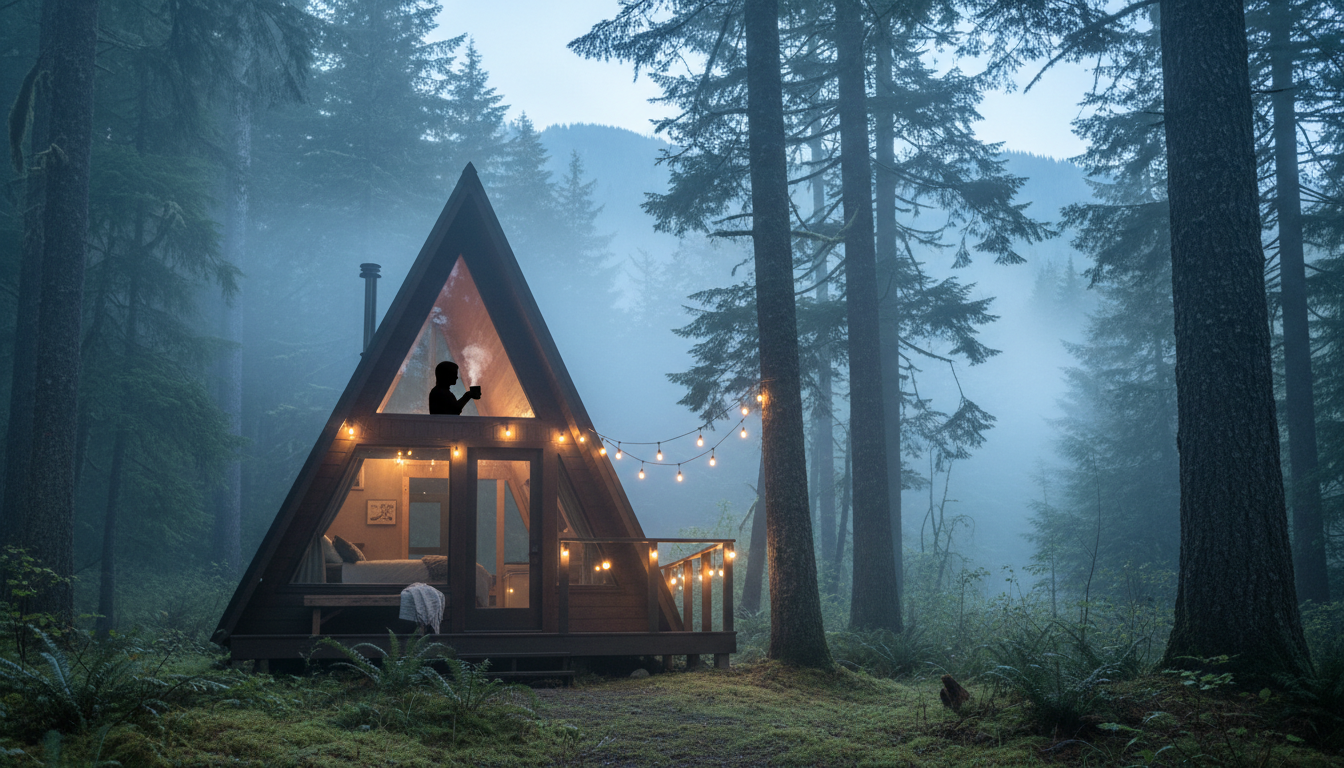 A-frame tiny cabin nestled among tall Douglas firs in Oregon, morning mist rolling through, string l
So here's what I've learned from doing 12 minimalist home swaps across three continents—and how you can start experiencing alternative living spaces without dropping $200 a night on those trendy glamping sites everyone's posting about.
Why Minimalist Home Swaps Are Exploding Right Now
The tiny house movement isn't just a Netflix documentary anymore. There are now an estimated 10,000+ tiny homes in the United States alone, and that number's growing by about 15% annually. Here's the thing—many of these owners are exactly the type of people who love home exchange. Adventurous. Community-minded. Eager to travel without hemorrhaging money on hotel prices.
Think about it: someone who builds a 300-square-foot home on wheels probably isn't interested in staying at a chain hotel. They want to experience how other people have solved the puzzle of living with less.
This creates a perfect ecosystem. Tiny house owners swap with other tiny house owners. Apartment dwellers curious about downsizing get to test-drive the lifestyle before committing. Families considering alternative living can actually see if their kids survive without 2,000 square feet. (Spoiler: they usually do.)
The financial math works too. A boutique tiny house rental on Airbnb runs $150-300 per night in most markets. A week-long stay? That's $1,050-2,100. Through home exchange, you're looking at... well, nothing. Just the credits you've already earned by hosting.
Types of Alternative Living Spaces You Can Actually Swap
When people hear "minimalist home swap," they usually picture those Instagram-perfect tiny houses—you know the ones, with the cedar siding and the lofted beds and the inexplicably photogenic coffee mugs. And yes, those exist. But the world of alternative living spaces is wonderfully, delightfully weird.
Tiny Houses on Wheels (THOWs)
The classic. Usually 100-400 square feet, built on trailers for mobility (and, let's be honest, to skirt building codes). I've stayed in THOWs in Asheville, Portland, and outside Austin. The best one was in Wimberley, Texas—a 220-square-foot cedar beauty with a clawfoot tub somehow crammed into the bathroom. The owner, a retired architect, had spent three years building it herself. You could feel that care in every corner.
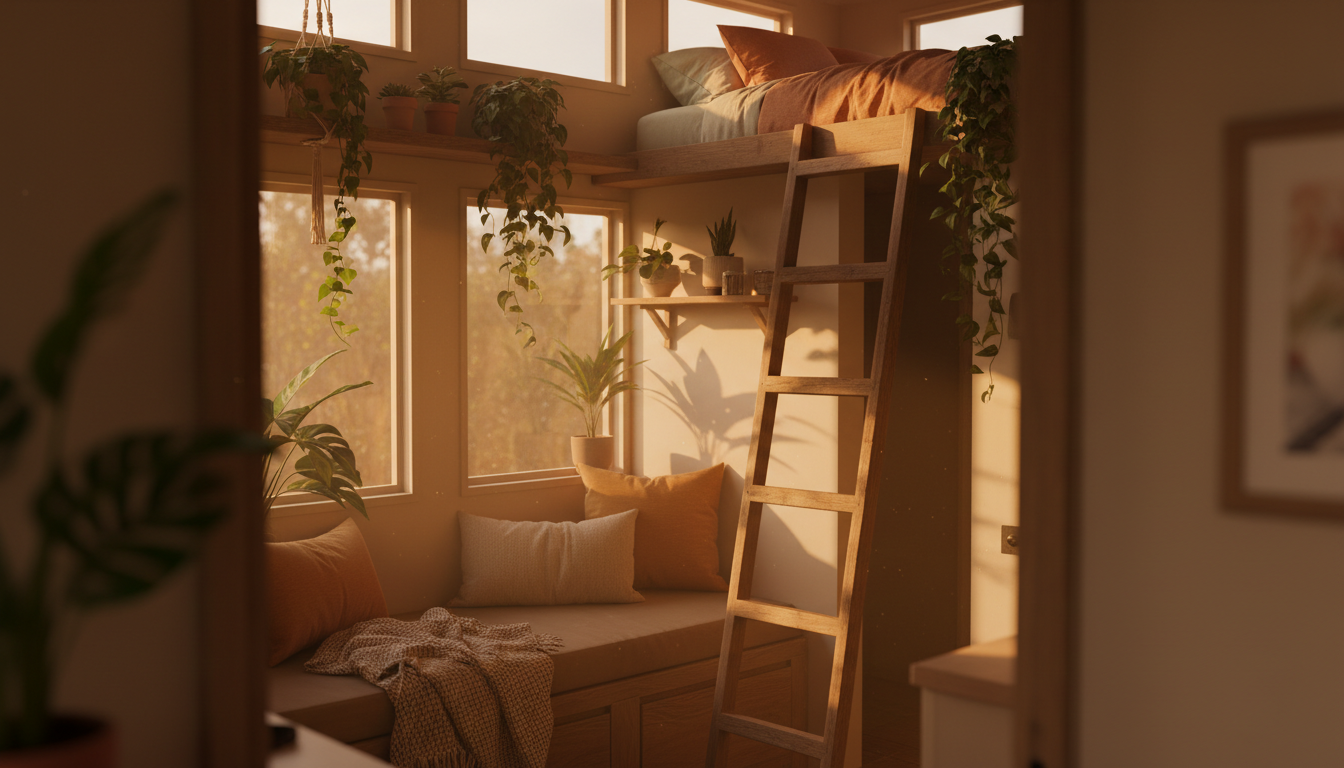 Interior of a thoughtfully designed tiny house showing multi-functional furniture, a ladder leading
The pros: often the most thoughtfully designed spaces, strong communities of builders who geek out over details, usually have full amenities. The cons: lofted beds can be tough if you have mobility issues, and parking situations vary wildly from "pastoral meadow" to "someone's driveway next to their recycling bins."
Converted Shipping Containers
I was skeptical until I stayed in one outside Joshua Tree. The owners had insulated it properly—crucial, because containers are basically metal boxes that become ovens otherwise—cut in massive windows, and created this industrial-chic space that felt like an art installation you could sleep in. Around $45,000 to build, they told me, versus $80,000+ for a comparable tiny house.
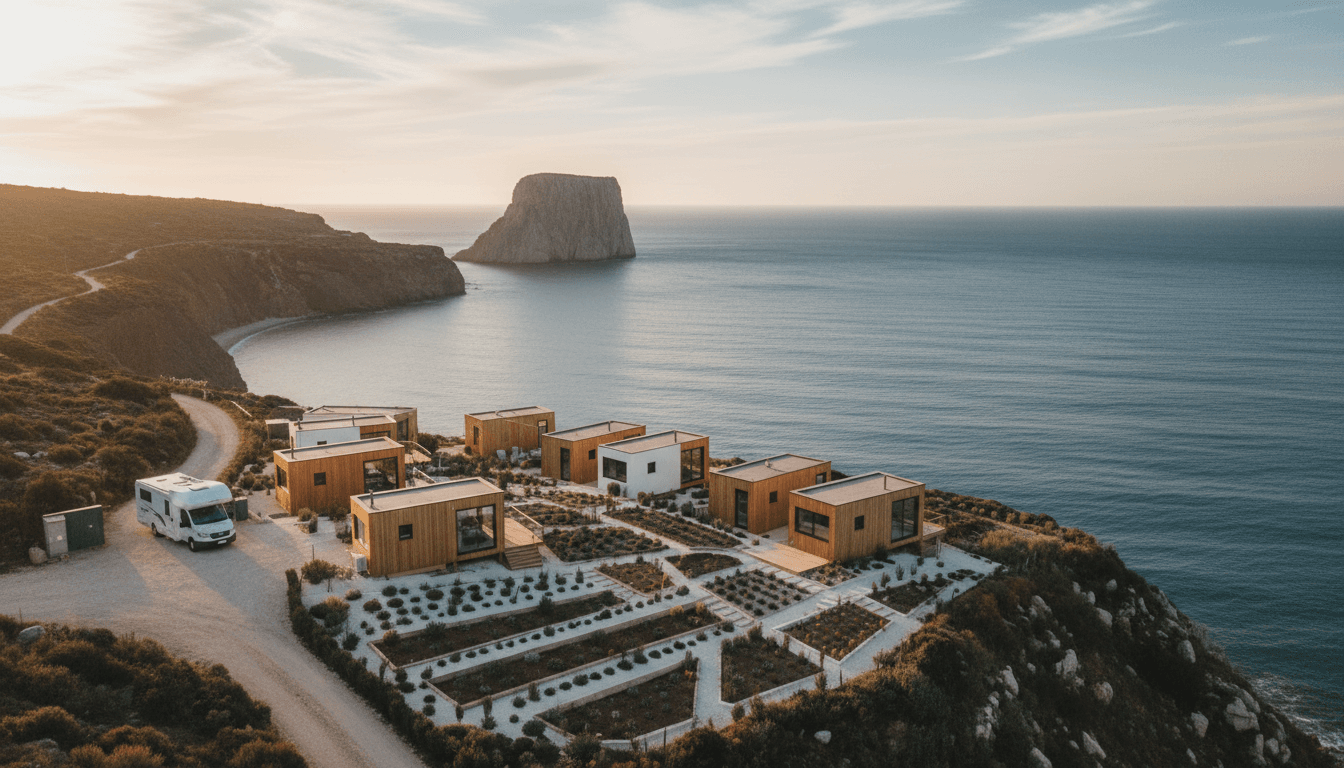
The container swap community is smaller but growing fast. Most are in the Southwest US, parts of Australia, and increasingly in Portugal and Spain where building regulations are more relaxed.
Yurts and Geodesic Domes
My wife thought I was joking when I suggested a yurt swap in Montana. She stopped laughing when she saw the photos—a 30-foot diameter Pacific Yurt with a wood stove, full kitchen, and views of the Bitterroot Mountains that made her cry. (She denies this. I have photographic evidence.)
Yurts are having a moment. There are now dedicated yurt communities in Colorado, Vermont, and throughout the Pacific Northwest. Geodesic domes are rarer but tend to be owned by exactly the kind of people who are very into home exchange—engineers, architects, sustainability nerds who want to talk about R-values over dinner.
Converted Vehicles
School buses ("skoolies"), sprinter vans, vintage Airstreams, even converted fire trucks. The van life crowd overlaps heavily with the home swap community, though logistics get trickier. You're essentially swapping vehicles, which requires more trust and way more communication.
I did one van swap—traded my San Francisco apartment for two weeks in a converted 1985 VW Vanagon in New Zealand. The owner flew to California, I flew to Auckland and picked up his van from the airport. Terrifying? Slightly. Worth it? Absolutely.
Off-Grid Cabins
Not all cabins are minimalist, but the off-grid ones usually are by necessity. Solar power, composting toilets, rainwater collection—you're forced into intentional living whether you planned on it or not. I've swapped into off-grid cabins in Vermont, British Columbia, and the Scottish Highlands.
The Highland cabin was memorable for the wrong reasons—I hadn't fully understood what "no running water" meant in February. But I learned to appreciate a heated outhouse, and I came home with a story that still gets laughs at dinner parties.
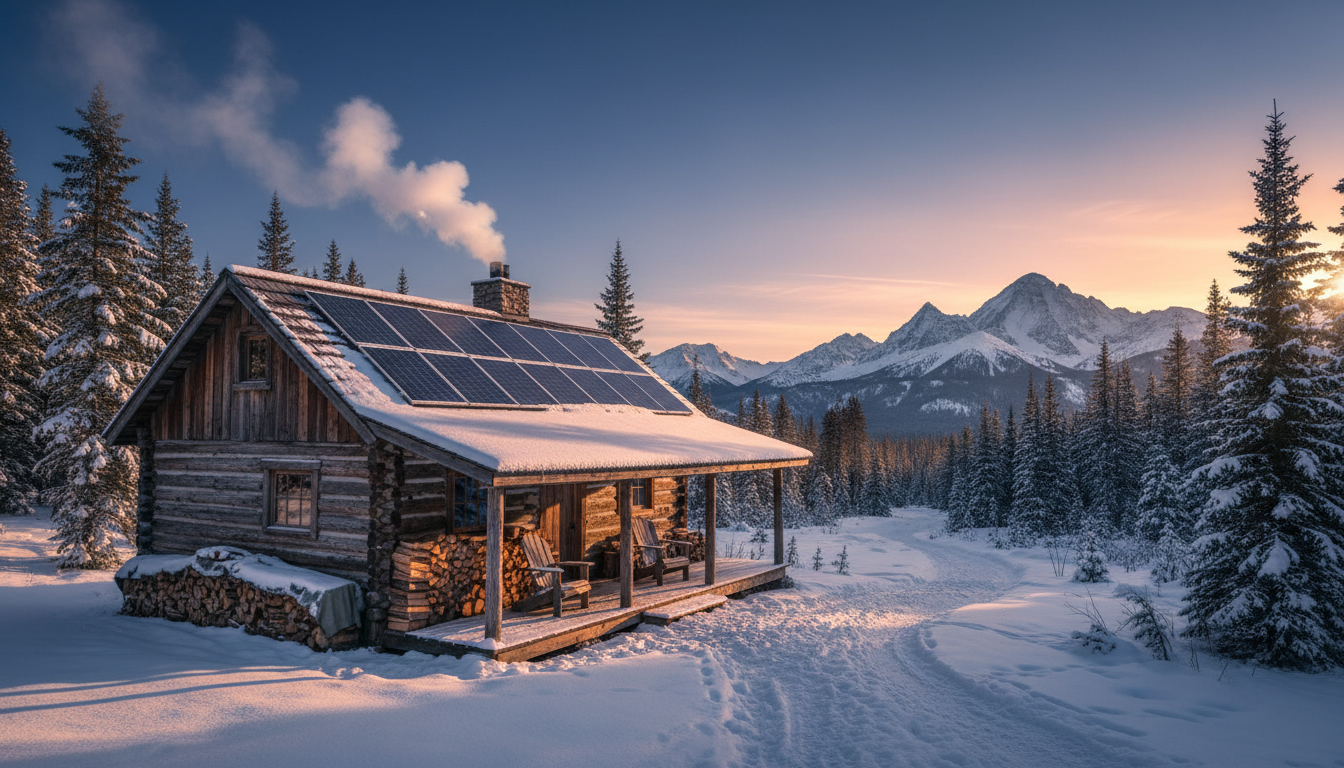 Rustic off-grid cabin with solar panels on the roof, a stack of firewood on the porch, snow-capped m
How to Actually Find Minimalist Home Swaps on SwappaHome
Alright, practical stuff. Finding alternative living spaces on home exchange platforms requires a slightly different approach than searching for apartments in Paris.
Optimize Your Search Strategy
Most tiny house and alternative home owners don't list in major cities—they're in rural areas, small towns, or on the outskirts of popular destinations. Instead of searching "Portland," try "Oregon" and filter by property type. Instead of "Austin," search the entire Texas Hill Country.
On SwappaHome, use the description search to find keywords like "tiny," "off-grid," "cabin," "converted," or "alternative." Many owners are genuinely proud of their unconventional homes and describe them in loving detail.
Make Your Profile Irresistible to Alternative Living Owners
Here's something I've noticed: tiny house owners are protective of their spaces. They've often built these homes themselves, poured years of thought into every single square inch. They're not going to let just anyone stay.
Your profile needs to signal that you get it. Mention your interest in sustainable living, minimalism, or intentional design. If you've stayed in alternative spaces before, say so. If you haven't, be honest but enthusiastic—"I've been fascinated by the tiny house movement and would love to experience it firsthand" goes a long way.
Photos matter too. Show your home looking tidy and intentional. Tiny house people notice clutter. Trust me on this.
Reach Out Proactively
Don't just wait for matches. When you find a minimalist home that excites you, send a personal message. Reference specific details from their listing—the built-in bookshelf, the outdoor shower, whatever caught your eye. Ask questions about the space.
I've found that alternative home owners respond much better to genuine curiosity than to generic swap requests. They want to share their lifestyle, not just their square footage.
What to Actually Expect: The Reality of Tiny House Living
Let me be real with you: minimalist home swaps aren't for everyone. Before you book that dreamy A-frame, consider what you're actually signing up for.
Space Constraints Are Real
You will bump your head. You will knock something over reaching for the coffee. You will have a moment—usually around day two—where the walls feel like they're closing in and you start questioning every life choice that led you here.
This is normal. It passes.
The trick is getting outside. Tiny house living works because you're not supposed to spend all day inside. The outdoors becomes your living room. If you're planning a minimalist home swap during a week of predicted rain, maybe reconsider. Or at least bring a really good book. And a backup book.
Amenities Vary Wildly
Some tiny houses have full kitchens with four-burner stoves and convection ovens. Others have a hot plate and a mini-fridge that sounds like a small aircraft taking off. Some have luxurious bathrooms with rainfall showers; others have composting toilets that require... participation.
Ask questions before you commit. Specifically ask about the bathroom situation (flush toilet? composting? outdoor?), hot water (on-demand? limited tank? solar-heated and therefore lukewarm?), heating and cooling (crucial in extreme climates), WiFi and cell service (often limited in rural areas), and parking and access (some tiny houses require 4WD to reach, which I learned the hard way in my rental sedan).
 Split image showing two different tiny house bathroomsone with a sleek modern shower, one with a rus
You'll Learn Things About Yourself
I'm not trying to get woo-woo on you, but something happens when you strip away excess. You notice what you actually use. You realize how much of your "stuff" is just noise—visual clutter you've stopped seeing but haven't stopped carrying.
After my first tiny house swap, I went home and donated four garbage bags of clothes. Not because I felt guilty, but because I genuinely didn't want them anymore. The minimalist home swap had recalibrated my sense of enough.
Preparing Your Own Home for Minimalist Travelers
Want to attract tiny house owners to swap with you? Even if you live in a regular apartment or house, you can make your space appealing to minimalist-minded travelers.
Declutter before photos—this seems obvious, but I've seen so many listings with cluttered counters and overflowing bookshelves. Minimalist travelers are literally people who've chosen to own less. They're not going to feel comfortable in visual chaos. You don't need to become a minimalist yourself. Just clear the surfaces, organize the closets, and photograph your space looking calm and intentional.
Highlight sustainable features. Do you have a garden? Mention it. Bike storage? Solar panels? A great recycling system? Energy-efficient appliances? These details matter to the alternative living crowd. Even small things count: "We have a collection of reusable shopping bags by the door" or "The local farmers market is a 10-minute walk."
Offer flexibility too. Tiny house owners often travel differently—longer, slower trips. They might be more interested in your neighborhood than tourist attractions. Be open to longer swaps, which work great with the credit system. They stay two weeks at your place, you bank 14 credits for your own tiny house adventure.
Best Destinations for Minimalist Home Swaps
Some regions have higher concentrations of alternative living spaces. If you're flexible on destination, consider these:
Pacific Northwest USA — Portland, Oregon is basically the tiny house capital of America. The surrounding areas—Hood River, Bend, the Columbia River Gorge—have dozens of tiny houses, yurts, and alternative builds. Washington State's San Juan Islands have a surprising number of off-grid cabins tucked into the trees.
Texas Hill Country — Wimberley, Fredericksburg, Dripping Springs—this region has embraced tiny houses in a big way. The climate is mild, the scenery is gorgeous (all those rolling hills and wildflowers), and there's a strong community of builders and dwellers.
Portugal — Europe's tiny house scene is smaller but growing, and Portugal is leading the way. Relaxed building regulations, affordable land, and a culture that values simplicity have attracted alternative builders from across the continent. The Alentejo region and areas around Sintra have the highest concentration.
New Zealand — Kiwis have been doing small-footprint living long before it was trendy. You'll find everything from converted woolsheds to purpose-built tiny houses to vintage caravans parked in stunning locations. The South Island especially.
British Columbia, Canada — The Gulf Islands, the Sunshine Coast, and the Okanagan Valley all have thriving alternative living communities. Expect off-grid cabins, yurts, and some truly creative builds that make you wonder why anyone needs 3,000 square feet.
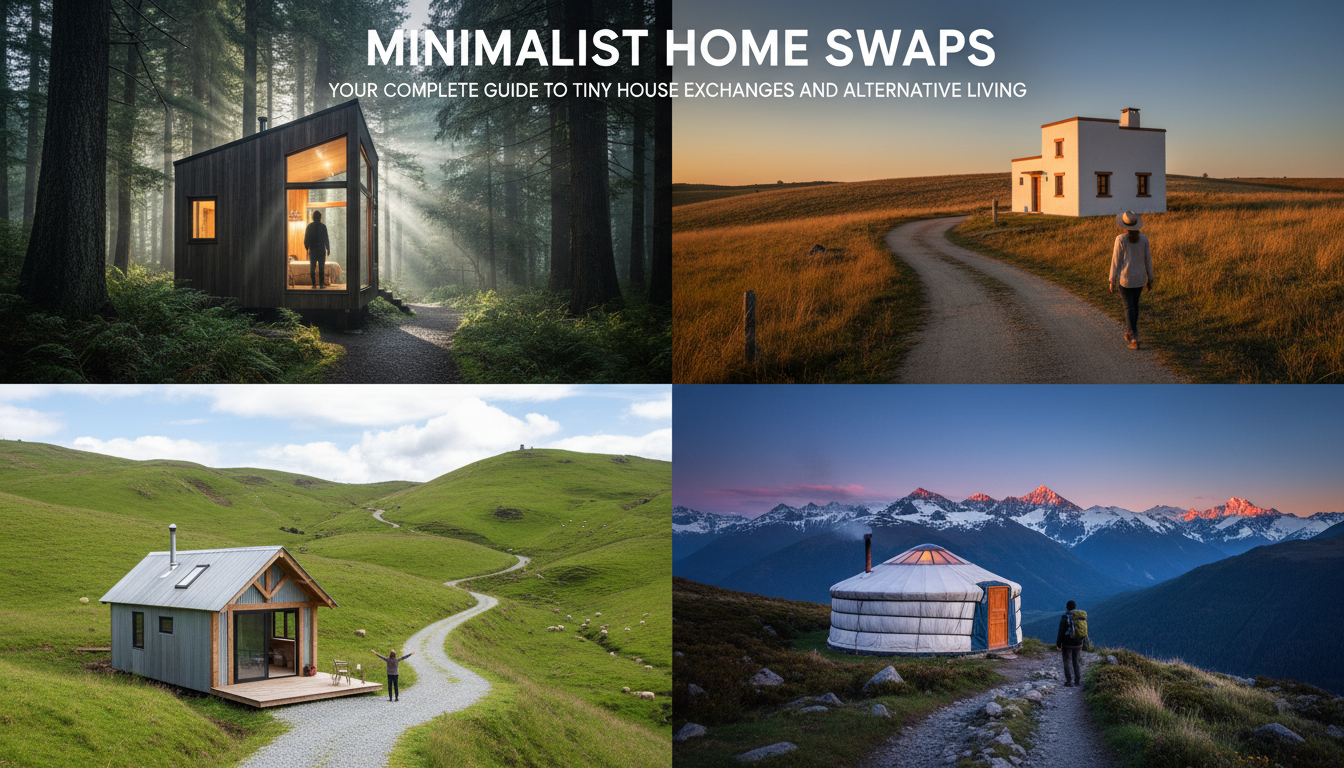 Collage of four minimalist homes in different settingsa modern tiny house in the Oregon forest, a wh
The Etiquette of Minimalist Home Swaps
Small spaces require extra consideration. Here's what I've learned about being a good guest in someone's tiny home.
Leave it cleaner than you found it. This applies to all home swaps, but it's especially important in tiny spaces where every crumb shows. In 200 square feet, a dirty dish isn't just messy—it's overwhelming. It takes over the whole visual field.
Respect the systems. If there's a composting toilet, learn how to use it properly. If there's a specific way to manage the solar batteries, follow the instructions. These aren't suggestions; they're how the home functions. One tiny house I stayed in had a note: "Please don't run the space heater and the electric kettle at the same time." I ignored it once. The breaker tripped at 11 PM in December. Lesson learned.
Communicate more than usual. Because systems are more complex in alternative homes, check in with your host more frequently. A quick message—"Hey, the water pressure seems low, is that normal?"—can prevent a bigger problem and a lot of stress.
Be honest in your review. The tiny house community is small. Your honest, detailed review helps other travelers know what to expect. Mention the good ("the loft bed was surprisingly comfortable") and the challenging ("the ladder is steep, not ideal for middle-of-the-night bathroom trips").
Making the Most of Your Minimalist Home Swap Experience
You've found the perfect tiny house. You've asked all the questions. Now how do you actually enjoy it?
Pack light—no, lighter than that. There's no closet. There might not even be a dresser. Bring a small bag and live out of it. This is part of the experience. I now have a dedicated "tiny house packing list": 3 days of clothes regardless of trip length (you'll do laundry), one pair of shoes, minimal toiletries, a good book, and a headlamp. That's it.
Embrace the outdoors. Most tiny houses have outdoor spaces that function as extensions of the home. A deck, a fire pit, a hammock. Use them. Eat outside. Read outside. Let the small interior be for sleeping and shelter, and let everything else happen under the sky.
Try the lifestyle, not just the space. Don't just sleep in a tiny house—live like a tiny house person for a few days. Cook simple meals. Limit screen time. Notice how little you actually need. Take the dog for a long walk. Have a conversation without background TV.
Document what you learn. I keep a note in my phone of design ideas I steal from every tiny house I stay in. The fold-down table in the Oregon THOW. The hidden storage under the stairs in Texas. The outdoor shower setup in New Zealand. Even if you never build a tiny house, these ideas translate. My San Francisco apartment has gotten more efficient after every minimalist swap.
Is Minimalist Home Swapping Right for You?
Honestly? Maybe not.
If you need consistent WiFi for work, if you have mobility issues that make loft beds impossible, if you're traveling with kids who need space to run around, if you're deeply attached to your morning routine and your specific coffee maker—a tiny house swap might be more frustrating than freeing.
But if you're curious. If you've ever watched a tiny house tour on YouTube and thought "I could do that." If you want to travel differently, more slowly, more intentionally. If you're open to a little discomfort in exchange for a lot of perspective.
Then yeah. Find a tiny house on SwappaHome. Message the owner. Ask about the composting toilet. Book the swap.
You might hate it. You might bump your head seventeen times and curse my name.
Or you might wake up at 3 AM in a 180-square-foot cabin, realize the silence isn't scary—it's peaceful—and start planning your next minimalist home swap before you've even left.
That's what happened to me.
Frequently Asked Questions
What is a minimalist home swap?
A minimalist home swap is a home exchange involving tiny houses, converted containers, yurts, off-grid cabins, or other alternative living spaces. Instead of paying nightly rates at trendy glamping sites ($150-300/night), you exchange stays using platforms like SwappaHome's credit system—earning credits by hosting and spending them to stay in unique minimalist properties worldwide.
Are tiny house swaps safe for first-timers?
Yes, tiny house swaps are safe when you communicate thoroughly with hosts beforehand. Ask detailed questions about amenities, access, and systems. Read reviews from previous guests. Most tiny house owners are protective of their spaces and carefully vet potential swappers. The SwappaHome community review system helps build accountability between members.
How much space do tiny houses typically have?
Most tiny houses range from 100-400 square feet, with 200-250 square feet being most common. For comparison, a standard hotel room is about 300-350 square feet. Tiny houses maximize space through lofted sleeping areas, multi-functional furniture, and clever storage. Many feel surprisingly spacious due to high ceilings and large windows.
Can families do minimalist home swaps?
Families can do minimalist home swaps, but it requires careful planning. Look for larger tiny houses (350+ square feet), yurts, or small cabins with separate sleeping areas. Some tiny houses have ground-floor beds suitable for children. Always ask hosts about family-friendliness and check if outdoor space can extend your living area during good weather.
What should I pack for a tiny house stay?
Pack extremely light for tiny house stays—there's minimal storage space. Bring 3-4 days of versatile clothing (you'll do laundry), minimal toiletries, a headlamp for loft navigation, layers for variable temperatures, and one good book. Leave bulky items at home. Most tiny houses provide basics like towels, bedding, and kitchen essentials.
40+
Swaps
25
Countries
7
Years
About Maya Chen
Travel Writer & Home Exchange Expert
Maya is a travel writer with over 7 years of experience in the home swapping world. Originally from Vancouver and now based in San Francisco, she has completed more than 40 home exchanges across 25 countries. Her passion for "slow" and authentic travel led her to discover that true luxury lies in living like a local, not a tourist.
Ready to try home swapping?
Join SwappaHome and start traveling by exchanging homes. Get 10 free credits when you sign up!
Related articles

Lyon Home Exchange: Your Complete Guide to France's Hidden Gem for Home Swapping
Discover why Lyon home exchange is booming among savvy travelers. From Croix-Rousse to Presqu'île, find the best neighborhoods and insider tips for your swap.

Zurich Bucket List: 47 Unforgettable Experiences to Enjoy During Your Home Swap
Discover the ultimate Zurich bucket list for home swappers—from secret swimming spots to fondue rituals locals actually do. Save thousands while living like a true Zürcher.
Dublin Home Exchange Utilities Guide: WiFi, Heating & Everything Your Guests Need
Master Dublin home exchange utilities—from dodgy WiFi fixes to heating quirks. Practical tips from 7 years of swapping homes across Ireland.