
Travel budgeting tips: home swapping for real savings

SwappaHome Editorial Team
Home Exchange & Slow Travel Editorial
Travel budgeting tips: home swapping for real savings !Couple comparing home swap offers > TL;DR: > > - Home swapping significantly reduces travel...
Travel budgeting tips: home swapping for real savings
 Couple comparing home swap offers
TL;DR:
- Home swapping significantly reduces travel accommodation costs by trading homes instead of booking hotels or rentals.
- Planning with clear priorities and understanding swap models and fees maximizes savings and enriches cultural experiences.
Accommodation eats up a brutal share of any travel budget. For a family or solo traveler trying to stretch every dollar, hotel rates in popular cities can easily run $150 to $350 per night, and short-term rentals aren't far behind. Home swapping flips that equation entirely, letting you trade your home for someone else's and cut one of travel's biggest costs down to near zero. This article walks you through how to set priorities, compare your options, understand the real numbers, and build a smart, complete budget before you ever pack a bag.
Table of Contents
- Set clear priorities before you budget
- Explore home swapping models for maximum savings
- Compare home swapping to rentals and hotels
- Add cultural exchanges to boost travel value
- Smart budgeting checklist for home swap trips
- Why real savings start long before your trip
- Start your home swap journey and save more
- Frequently asked questions
Key Takeaways
| Point | Details |
|---|---|
| Clarify priorities | Knowing what matters most helps you avoid overspending and maximize travel experiences. |
| Choose the right swap model | The type of home swap and its fee structure can change your total trip cost. |
| Home swapping vs hotels | A typical home swap can save families thousands compared to hotel stays. |
| Leverage cultural exchanges | Adding local experiences and cultural exchange boosts both savings and enjoyment. |
| Budget for all costs | Consider platform, cleaning, and extra experience fees for a true travel budget. |
Set clear priorities before you budget
Now that you know there's a smarter way to travel, let's start by zeroing in on what you really want from your trip. Most overspending happens not from one big mistake but from dozens of small, unplanned choices made on the fly. A hotel upgrade here, a pricier neighborhood there, an extra night added at the last minute. These add up fast.
Start by listing your absolute must-haves. Do you need to be in the city center, or are you fine with a quieter neighborhood and a short train ride? Is a full kitchen critical for saving on meals? Are you traveling with kids who need more space or specific amenities? Knowing the answers before you search means you won't talk yourself into something out of budget because it "seemed nice."
Then look at where you're willing to make trade-offs. Many travelers, for example, overestimate how much they'll spend on food and underestimate lodging costs. They plan for restaurant meals but forget that a home with a full kitchen can cut food costs by 40 to 60 percent compared to eating out every meal. Good cost-effective travel explained starts with knowing your priorities before prices enter the conversation.
- Location: City center vs. quiet suburb with transit access
- Space: Studio or shared home vs. multi-bedroom for families
- Amenities: Kitchen, laundry, parking, fast Wi-Fi
- Experience: Cultural immersion, local neighborhood feel, or tourist-friendly areas
Pro Tip: Write a short checklist of your top five must-haves and three "nice-to-haves" before you evaluate any swap offer. It keeps you focused and prevents impulse decisions that blow your budget.
Explore home swapping models for maximum savings
Once you've settled on priorities, it's time to look at how home swapping works and which setup will stretch your dollars furthest.
There are three main types of home swaps, and each one has a different impact on your budget. Simultaneous swaps are exactly what they sound like: both parties stay in each other's home at the same time. This is the simplest model and usually involves the least coordination hassle. Non-simultaneous swaps allow flexibility, meaning you don't have to travel at the same time as your swap partner. This opens up far more options but requires more trust and clear communication. Credit-based swaps are the most flexible of all. You host a guest, earn credits, and spend those credits later at another home of your choosing, on your own schedule.
As the Seattle Times notes, selecting a niche home-swapping model changes the budgeting math, but platforms often charge membership, service, or cleaning fees that can materially affect breakeven. That means you need to factor in more than just the "free" accommodation before declaring victory on your budget.
Here's a breakdown of what each model typically involves:
| Swap type | Flexibility | Typical platform fees | Best for |
|---|---|---|---|
| Simultaneous swap | Low | Membership only | Fixed-schedule travelers |
| Non-simultaneous | Medium | Membership + service | Flexible planners |
| Credit-based | High | Membership + credits | Frequent or solo travelers |
Look into affordable home swap options when you're comparing platforms, especially for hidden fees like insurance add-ons or cleaning charges that hosts may pass on to guests.
- Credit-based platforms like Swappahome use a one-credit-per-night system, making costs predictable
- Membership fees range from free tiers to $150 or more per year, depending on the platform
- Cleaning fees vary widely but are often optional or negotiable in peer-to-peer swaps
- Some platforms offer free starter credits to new members, which can make your first trip essentially free
Pro Tip: Match the swap type to your travel flexibility. If you can travel off-season or adjust dates by a week, credit-based swaps open up dramatically more options and lower your effective cost per night compared to peak bookings.
The real savings from affordable global travel with home swapping come when you combine low platform fees with a flexible travel window. That combination is where the math really starts working in your favor.
Compare home swapping to rentals and hotels
Understanding the different models, now see the actual numbers compared to other common lodging options.
Let's look at a concrete example: a family of four planning a 10-night trip to Lisbon, Portugal. A mid-range hotel would cost roughly $180 per night, totaling $1,800 for accommodation alone, before taxes or resort fees. A well-reviewed Airbnb for the same period might run $140 per night, which is $1,400 total. A home swap with a small annual membership fee of $100 and a minimal credit cost? You're looking at under $200 for the entire accommodation budget. That's a staggering difference.
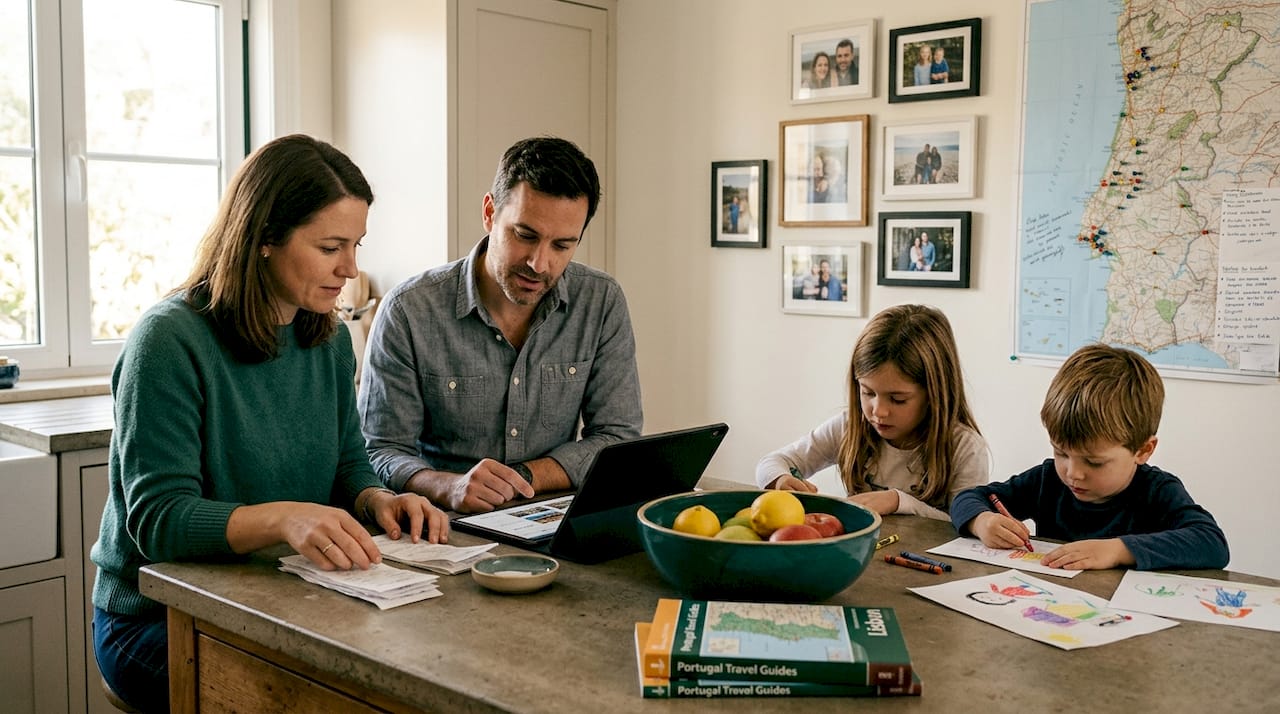 Family comparing Lisbon lodging choices
| Accommodation type | Cost per night | 10-night total | Annual platform cost | True total |
|---|---|---|---|---|
| Hotel (mid-range) | $180 | $1,800 | $0 | $1,800 |
| Vacation rental | $140 | $1,400 | $0 | $1,400 |
| Home swap (credit) | ~$10 in credits | ~$100 | $100 membership | ~$200 |
As Swappahome's own research shows, families save $3,000+ per trip by choosing home swapping over hotels. That number accounts for lodging costs but also the added value of kitchen access, laundry, and more living space that prevents families from paying for multiple hotel rooms.
"Home swapping isn't just cheaper. It's a completely different kind of travel. You live in a neighborhood, cook your own meals, and feel like a local instead of a tourist passing through."
The extra value is real and worth putting a dollar amount on. Kitchen access saves roughly $30 to $50 per day on meals for a family. In-home laundry prevents the need for laundromat visits or packing extra luggage. Staying in residential neighborhoods, rather than tourist zones, means cheaper grocery stores, better restaurants, and a more authentic feel. Check out home swapping vs rentals to see a detailed breakdown.
There are some genuine downsides to plan for. Coordination takes time and clear communication upfront. Trust between strangers requires verified profiles and honest reviews. Not every destination has a dense enough network of swap partners. And platforms like Airbnb have far larger inventories, making last-minute bookings more reliable. Understanding the home swapping vs Airbnb trade-offs will help you decide when swapping wins and when a rental makes more sense.
Add cultural exchanges to boost travel value
Comparing raw numbers is just the start; true value comes from more immersive, affordable experiences.
One of the most underrated benefits of home swapping is the cultural access it creates. When you swap with a local homeowner, you inherit their knowledge of the city. Their restaurant recommendations, their neighborhood shortcuts, their favorite weekend markets. No travel guide replicates that. And many swap partners are happy to go further, arranging informal cultural exchanges that cost nothing but add enormous value to your trip.
Here's how to introduce cultural exchange early in the planning process:
- Reach out before confirming the swap. Ask your partner what experiences they'd recommend. This opens a natural conversation about shared interests.
- Propose a meal exchange. Offer to leave local recipes or ingredients at your home for your swap partner, and ask if they'd be willing to do the same. Some hosts will even cook a welcome meal.
- Ask about guided city walks. Many homeowners are happy to walk guests around their neighborhood for an hour when schedules align. It's free, personal, and far better than a tourist tour.
- Look into local cooking lessons. These are often available through community centers or local hosts at a fraction of the cost of tourist-marketed cooking classes.
- Arrange connections to local events. Farmers markets, neighborhood festivals, and community sports games are free or cheap and completely off the tourist radar.
Pro Tip: When reaching out to a potential swap partner, mention one cultural exchange idea you'd love to try in their city. It builds rapport fast and positions you as an engaged, thoughtful guest rather than just someone looking for a free place to stay.
Language and etiquette barriers are real but manageable. A short note in your partner's language, even just a greeting and a "thank you," goes a long way. Understanding basic etiquette, like whether to remove shoes indoors or whether gifts are expected, prevents awkward moments. You can learn how to organize cultural travel experiences well before your trip to make these exchanges smooth and genuinely rewarding.
Smart budgeting checklist for home swap trips
With cultural value considered, finish with all the practical details to lock in a foolproof travel budget.
A lot of travelers assume that because accommodation is free or nearly free, the overall budget is automatically lean. That's not quite right. There are still real costs to plan for, and missing them creates stress mid-trip. Use this checklist before every swap:
- Platform membership fee: Paid annually or per trip, depending on the platform
- Cleaning fees: Clarify whether the host charges these or if they're included
- Security deposit: Some platforms hold one temporarily; confirm the amount and return policy
- Travel insurance: Especially important when staying in someone else's home; look for policies that cover home swap arrangements
- Flights and local transit: Factor in airport transfers, city passes, or car rental if the swap home is outside a walkable area
- Groceries: You'll likely cook more than on a hotel trip, so budget realistically for food shopping
- Small host gifts: A local treat or wine from your hometown is a thoughtful touch and costs very little
- Activity and experience budget: Don't let lodging savings sit idle; reinvest some into memorable local experiences
- Data and communication costs: Confirm the home has Wi-Fi, and plan for mobile data if you'll be exploring without it
- Emergency fund: Always hold back a small reserve for surprises
Pro Tip: Build in a 10% buffer on your total trip budget for unexpected expenses. A last-minute train ticket, a higher-than-expected grocery run, or a spontaneous day trip won't derail you if you've planned for it.
Learning how travel networks unlock affordable home swapping globally can also help you find destinations where your dollar stretches even further, especially in regions with strong, established swap communities.
Why real savings start long before your trip
Most budget travel advice focuses on finding deals. Book early, use comparison sites, watch for sales. And those tactics have value. But the travelers who consistently get the best trips for the least money aren't just deal hunters. They're intentional planners who decide what they value before they ever look at a price.
The honest truth is that flexibility is worth more than any coupon code. A traveler who can swap in May instead of July, who's willing to stay in a great neighborhood one metro stop from the tourist center, and who treats the swap as a genuine cultural exchange rather than just a free hotel? That traveler will always outperform the one who locks in rigid plans and scrambles to find savings on top of them.
There's also something most people overlook: the community itself has value. When you're part of a trusted network of verified homeowners, you're not just accessing free rooms. You're accessing local knowledge, goodwill, and the kind of hospitality that money genuinely cannot buy. That's not a small thing. It changes the texture of the whole trip.
The affordable global travel insights that matter most come from this mindset shift. Real savings are built on planning with intention, communicating clearly with swap partners, and embracing the cultural richness that comes from staying where locals actually live. That's what separates a good trip from a great one, and it starts months before departure.
Start your home swap journey and save more
These tips give you a real framework, but the next step is putting them to work with the right platform.
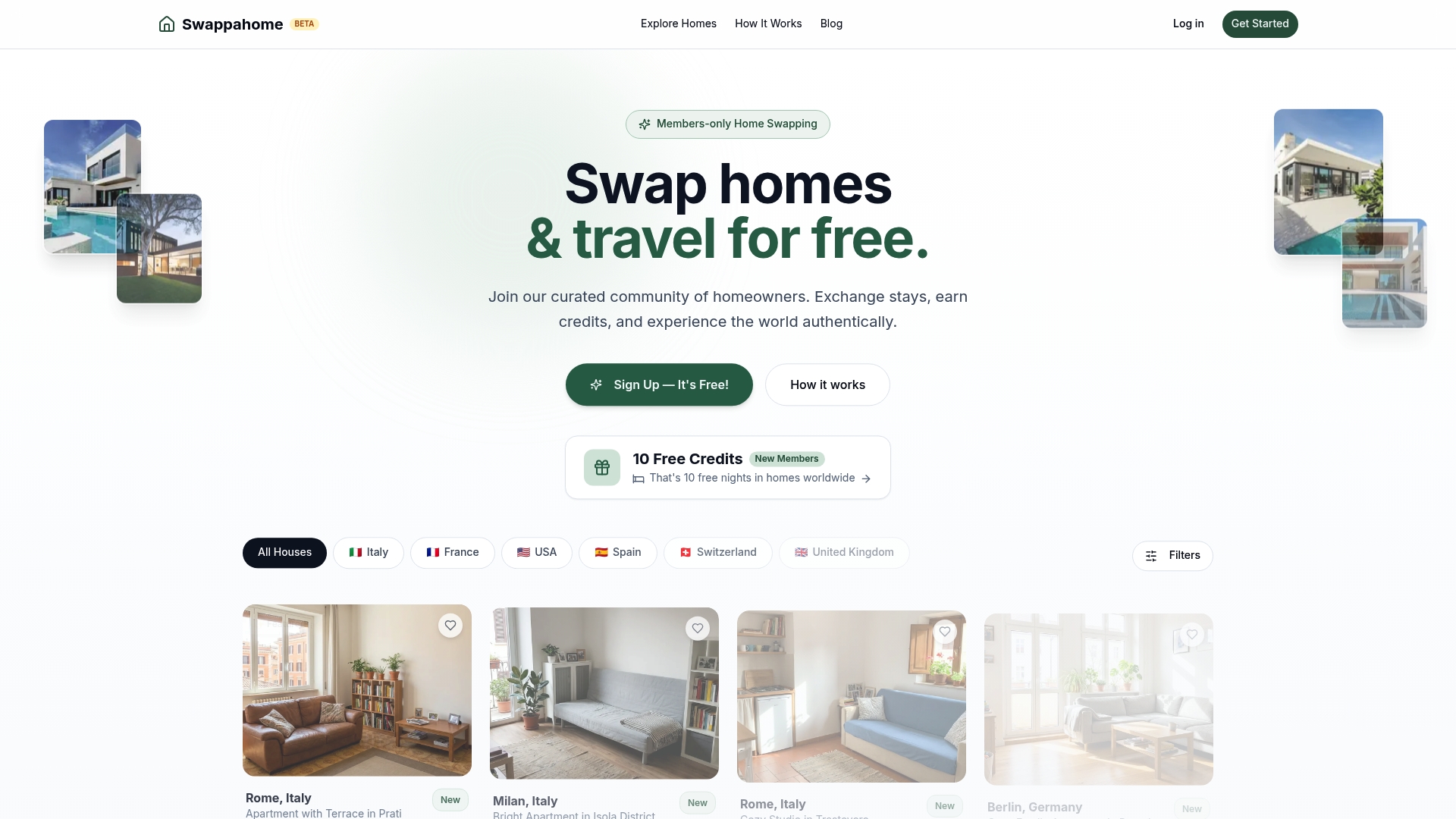 https://swappahome.com
Swappahome makes it easy to go from reading about home swapping to actually doing it. The platform connects verified homeowners around the world through a straightforward credit system: host a guest, earn a credit, use it for a free night somewhere new. New members even receive free starter credits, so your first trip can cost almost nothing in accommodation. Browse the Swappahome home swapping platform to start exploring available homes, or go directly to browse listings to see what's available in your target destinations. If cultural exchange is part of your travel vision, don't miss the home exchange food and culture experiences section, where local hosts share meals, traditions, and authentic neighborhood access you won't find in any hotel.
Frequently asked questions
What is the average total cost of a home swap trip?
Most travelers should budget for platform membership, possible cleaning fees, and day-to-day local expenses. As highlighted by the Seattle Times, these fees can affect the overall savings, but total accommodation costs still run far below hotels or short-term rentals in most cases.
How can I minimize extra fees when home swapping?
Choose a flexible swap type that fits your schedule, and clarify all costs with your partner before confirming. Platforms that charge membership, service, or cleaning fees vary widely, so comparing platforms upfront prevents surprises.
Are there ways to combine home swapping with other cultural exchange opportunities?
Absolutely. Many hosts arrange meal sharing, neighborhood walks, or local event invitations as part of the swap experience, adding rich cultural value at no additional cost to either party.
Does home swapping work for families with children?
Home swapping is particularly well-suited to families because it provides multiple bedrooms, kitchen access, and living space that hotels simply can't match at the same price. Research shows families save $3,000+ per trip compared to hotel stays, making it one of the most powerful options for family travel on a budget.
Recommended
- Home Swapping vs Rentals: Real Savings for Travelers | SwappaHome Blog
- Difference Between Home Swapping and Airbnb: Real Savings | SwappaHome Blog
- 7 Smart Ways to Save on Accommodation While Traveling | SwappaHome Blog
- Las Vegas on a Budget: Home Swapping Saves Thousands | Guide
- Budget Planning for Vietnam Tours | VietnamTourPackage.sg
- 7 Essential Tips for Understanding Cost of Living for Expats

Published by
SwappaHome
SwappaHome Editorial Team
Home Exchange & Slow Travel Editorial
The SwappaHome Editorial Team brings together travel research, home-exchange community insights, and platform data to produce practical guides for first-time and experienced home swappers. Every article cites real platforms, current market rates, and verifiable city-level facts so readers can make informed decisions without guessing.
Ready to try home swapping?
Join SwappaHome and start traveling by exchanging homes. Get 7 free credits when you sign up!